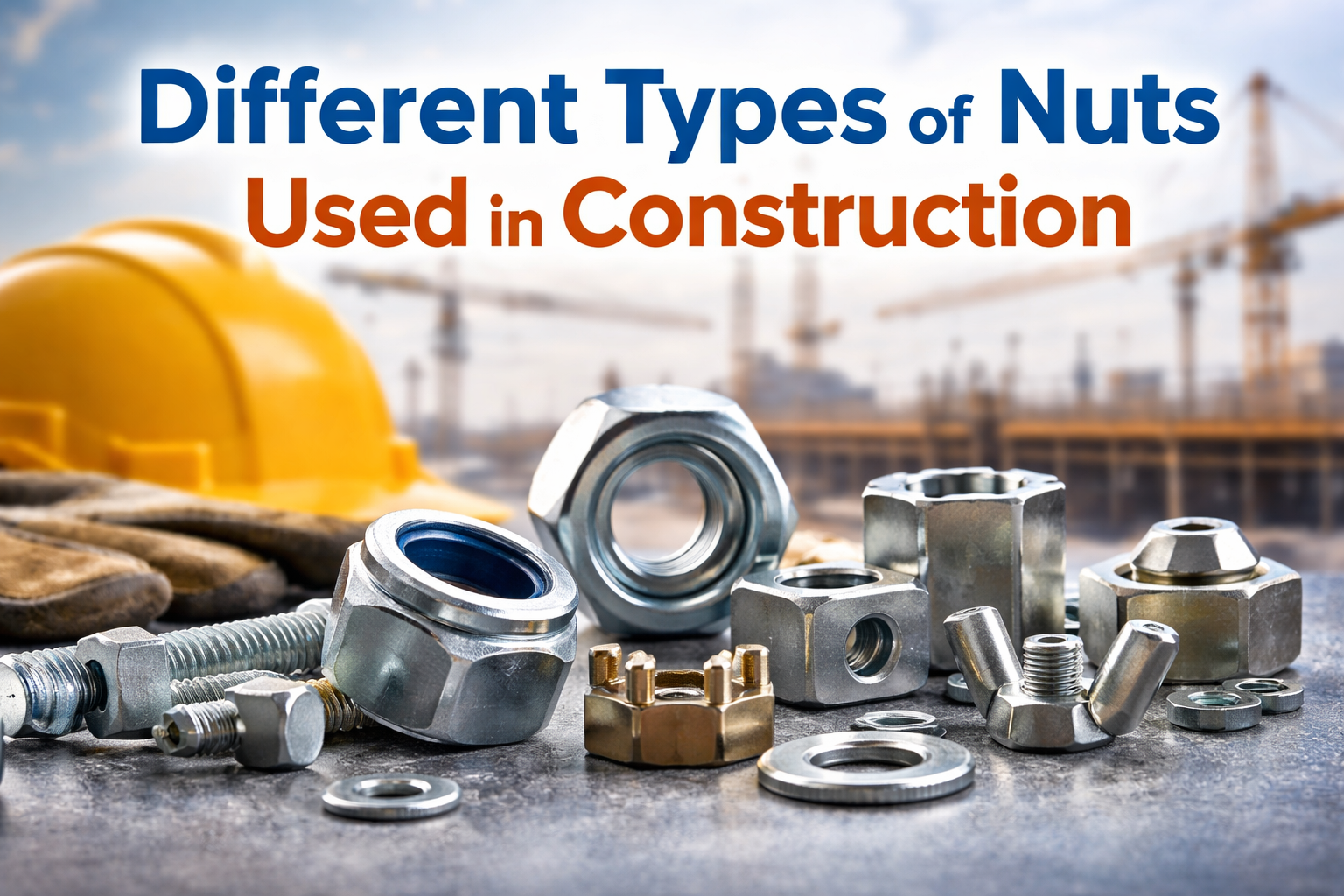
Construction projects rely on many components, but fasteners often decide whether a structure stays strong or slowly falls apart. Among these fasteners, nuts play a crucial role. They hold bolts in place, secure heavy components, and help engineers create strong connections in buildings, bridges, and machinery.
At first glance, a nut may look like a simple piece of metal with threads inside. However, the construction industry uses many different types of nuts, each designed for specific loads, environments, and safety requirements.
In this guide, we will explore the most common types of nuts used in construction, explain how they work, and show where builders use them.
What Is a Nut in Construction?
A nut is a threaded fastener that works with a bolt or threaded rod to join materials together. When you tighten a nut on a bolt, the threads create friction. This friction locks the joint and prevents the materials from separating.
Engineers often choose nuts because they create strong, removable connections. Unlike welding or adhesives, nuts allow workers to dismantle structures or machinery when maintenance becomes necessary.
According to the American Institute of Steel Construction (AISC), bolted connections remain one of the most widely used joining methods in structural steel construction because they offer strength, reliability, and ease of installation.
Why Different Types of Nuts Are Used in Construction
Not every construction project faces the same conditions. Some structures carry heavy loads. Others experience vibration, moisture, or temperature changes.
Because of this, engineers select different nuts based on several factors:
- Load capacity
- Vibration resistance
- Environmental exposure
- Ease of installation
- Safety requirements
Using the wrong nut can lead to loose joints, structural failures, or expensive repairs. That is why construction standards such as ASTM International fastener standards provide strict guidelines for selecting the correct fasteners.
Hex Nuts
The Most Common Construction Nut
The hex nut is the most widely used nut in construction. It features six sides, which allow workers to tighten it easily using a wrench or socket.
Contractors use hex nuts in almost every type of project, including:
- Structural steel connections
- Machinery assembly
- Bridges
- Industrial equipment
The hexagonal shape also provides good torque control. Workers can apply strong tightening force without slipping tools.
According to ASTM A563, hex nuts commonly appear in structural steel applications where they pair with high-strength bolts.
Why Builders Prefer Hex Nuts
Hex nuts remain popular because they offer:
- Simple installation
- Strong clamping force
- Compatibility with standard tools
- Wide availability in different grades and materials
For most construction tasks, the hex nut becomes the default option.
Nylon Lock Nuts
A Nut That Prevents Loosening
Construction sites often involve vibration. Heavy equipment, moving loads, and machinery can cause standard nuts to loosen over time.
Nylon lock nuts, also called nyloc nuts, solve this problem. These nuts contain a nylon insert at the top. When the bolt enters the nut, the nylon creates additional friction that locks the threads.
This design prevents the nut from rotating loose.
Common Applications
Engineers often use nylon lock nuts in:
- Mechanical assemblies
- Construction machinery
- Equipment exposed to vibration
- Automotive components
The nylon insert acts like a safety feature. It keeps the connection tight even when movement occurs.
Heavy Hex Nuts
Designed for Structural Steel
Heavy hex nuts look similar to standard hex nuts but feature a thicker and wider design. This extra material increases their strength and load capacity.
Structural engineers use heavy hex nuts in high-strength bolted connections, especially in large steel structures.
You will often find these nuts in:
- Steel buildings
- Bridges
- Infrastructure projects
- Industrial facilities
The Research Council on Structural Connections (RCSC) recommends heavy hex nuts for high-strength structural bolts because they provide better bearing surfaces and improved load distribution.
Square Nuts
A Traditional but Useful Fastener
Before hex nuts became common, builders often used square nuts. These nuts feature four sides instead of six.
While modern construction uses them less frequently, square nuts still offer some advantages.
Why Some Projects Still Use Square Nuts
Square nuts provide:
- Greater surface contact with materials
- Better resistance to loosening
- Simpler manufacturing
You may find square nuts in:
- Restoration projects
- Wooden structures
- Older machinery systems
Their large surface area also helps distribute pressure across softer materials like wood.
Wing Nuts
Hand-Tightening Without Tools
Wing nuts feature two large metal “wings” on opposite sides. These wings allow workers to tighten or loosen the nut using their fingers.
Because of this design, wing nuts work best in situations where tools are not practical.
Typical Construction Uses
Wing nuts appear in:
- Temporary structures
- Adjustable fixtures
- Light assembly tasks
- Construction formwork systems
Workers can quickly install or remove them without a wrench. That convenience makes them useful in situations that require frequent adjustments.
However, wing nuts do not handle heavy loads well. Builders usually reserve them for lighter applications.
Cap Nuts
Protection and Safety in One Design
Cap nuts, also called acorn nuts, include a closed dome on one side. This dome covers the exposed bolt threads.
This simple design provides two benefits:
- It protects threads from corrosion and damage.
- It prevents injuries from sharp bolt ends.
Construction teams often use cap nuts in places where safety and appearance matter.
Where Cap Nuts Are Used
You will commonly see cap nuts in:
- Handrails
- Public structures
- Architectural metalwork
- Decorative installations
They provide both protection and a clean finish.
Coupling Nuts
Extending Threaded Rods
A coupling nut has a longer body than standard nuts. Instead of fastening a bolt to a surface, it connects two threaded rods together.
Builders use coupling nuts when they need to extend threaded rods in construction systems.
Common Uses
Coupling nuts often appear in:
- Structural rod systems
- Suspended ceilings
- Mechanical installations
- Equipment mounting systems
Their extended length ensures strong thread engagement between rods.
Slotted and Castle Nuts
Nuts Designed for Safety Locking
Some applications require extra security to prevent nuts from loosening. Slotted nuts and castle nuts include vertical slots on one side.
After tightening the nut, workers insert a cotter pin through a hole in the bolt. The pin passes through the slots, preventing the nut from rotating.
Typical Uses
Engineers often use these nuts in:
- Heavy equipment
- Mechanical systems
- Rotating components
- Infrastructure applications
The cotter pin acts as a physical locking mechanism. Even if vibration occurs, the nut cannot move.
Materials Used for Construction Nuts
The material of a nut affects its strength, corrosion resistance, and durability.
Common materials include:
Carbon steel
Most construction nuts use carbon steel because it offers strong mechanical properties and good affordability.
Stainless steel
Stainless steel nuts resist corrosion. Engineers often select them for outdoor structures or marine environments.
Alloy steel
Alloy steel nuts handle high-strength structural applications, especially when paired with high-strength bolts.
According to ASTM International fastener standards, selecting the correct material ensures that nuts meet safety and load requirements.
How Engineers Choose the Right Nut
Selecting the correct nut involves more than simply matching a bolt size. Engineers consider several factors before making a decision.
Load Requirements
Heavy loads require stronger nuts, such as heavy hex nuts or high-strength alloy steel nuts.
Environmental Conditions
Outdoor projects may require corrosion-resistant materials like stainless steel.
Vibration Exposure
Projects involving machinery or moving components often require lock nuts or castle nuts.
Installation Requirements
Temporary structures may benefit from fasteners like wing nuts that allow quick installation.
These considerations help ensure safe and reliable construction connections.
Final Thoughts
Nuts may look small, but they play a massive role in construction. Every building, bridge, and industrial structure depends on reliable fasteners to maintain structural integrity.
Different types of nuts serve different purposes. Hex nuts provide general fastening strength, nylon lock nuts resist vibration, heavy hex nuts support structural steel, and castle nuts offer mechanical locking.
Understanding these options helps engineers, contractors, and builders choose the right fastener for each job.
In construction, the smallest components often carry the biggest responsibilities. A well-selected nut might never attract attention—but it quietly keeps entire structures standing strong.